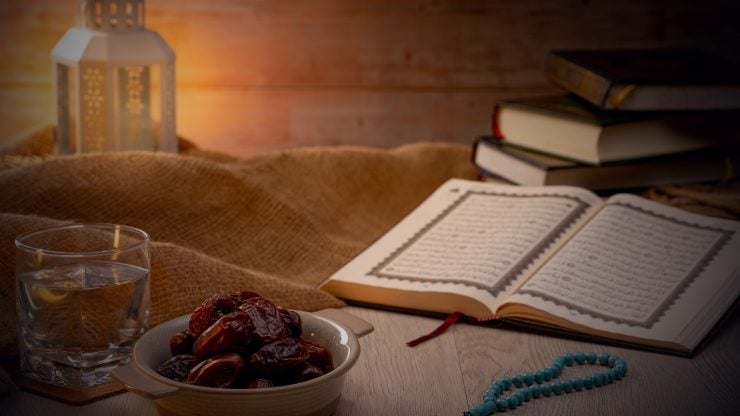
It is very well observed, and very predictable, that there occurs a sort of dip in the middle stretch of Ramadan. A low point. A fatigue in devotion. The excitement from the first nights settles. The body feels it. The soul feels it.
I want to equip you with ten Prophetic teachings: ten reminders from the Messenger of Allah ﷺ so that you can combat this dip.
1. Faith has highs and lows, and that is normal
A companion once became alarmed, fearing he had become a hypocrite. Why? Because when the Prophet ﷺ spoke about Paradise and Hellfire, his faith would soar. It was as if he could see the Hereafter before him. But when he returned home to family, business, and responsibilities, that intensity would taper off.
Abu Bakr (rA) admitted he felt the same. They approached the Prophet ﷺ, who reassured them:
If you were to remain in the state you are in with me, the angels would shake your hands in your homes and on your roads. But, O Hanzala, there is a time for this and a time for that.[1]
In other words: fluctuation is part of being human. So relax and have some self-compassion. Don’t let temporary fatigue cause you to throw in the towel altogether.
2. Be proactive, not powerless
The Prophet ﷺ said:
Be keen on what benefits you, seek help from Allah, and do not give up.[2]
Don’t spend your energy crying over spilled milk. What’s done is done. Focus on the present. Ramadan has already proven to you that you are capable of more than you think. You have the same 24 hours with no extra time added to the day; yet suddenly there is more Qur’an, more charity, more patience. If Allah showed you that you can do more, He can help you sustain it, and even elevate it.
3. Every enthusiasm has a decline
The Prophet ﷺ taught:
Every deed has an enthusiasm, and every enthusiasm has a decline. Whoever’s decline remains within my Sunnah has succeeded.[3]
Spiritual momentum will taper. That is normal. The key is to not crash outside the bounds of guidance. When you dip, don’t dip too far. Get up and start again. Just keep moving.
4. It was never meant to be an “Instagram Ramadan”
Many of us imagine Ramadan as a flawless spiritual experience. We picture ourselves fully focused at every iftar, making passionate dua every night, never missing a beat. But Ramadan was never meant to consist of “Instagram moments.” There will be emergency grocery runs, sick children, exhaustion, interruptions, and hiccups. And that is by design.
Because life after Ramadan has hiccups too. This month is not about perfection. It is about improvement that survives beyond the month.
5. Quality over quantity
They asked the Prophet ﷺ which fasting person is best. He replied:
The one who remembers Allah the most.[4]
It is not just about abstaining from food and drink. Let your hearing fast. Let your sight fast. Let your tongue fast from lying and offensive speech. Bask in tranquility and reverence. Don’t let the only difference between your fasting day and your nonfasting day be hunger. Increase the quality of your fast by remembering Allah more.
6. Intention multiplies everything
The Prophet ﷺ said:
Actions are judged by intentions.[5]
Be intentional about everything. Cooking becomes worship when you intend to strengthen your family for devotion. Sleep becomes worship when you intend to recharge for prayer. Work becomes worship when you intend to gain provision through halal means. A tiny deed can become immense through intention. A great deed can shrink because of the absence of it. Layer your intentions and multiply your reward.
7. Ramadan is a market. Don’t fall asleep in it.
The Prophet ﷺ said:
Every night of Ramadan, Allah frees people from the Fire.[6]
Every night—not just the first ten, not just the last ten. Ramadan is like a market filled with unbelievable deals. Every day is a treasure. Don’t drift through the middle of it. Ibn al-Jawzi (rA) said that if those in their graves could make one wish, they would wish for one more day of Ramadan.
8. Being special when others slow down
The Prophet ﷺ said:
Your Lord marvels at a young person who does not stray.[7]
Why youth? Because it is a time of strength and temptation. Mid-Ramadan is similar. It is when many people slow down. If you persist during this stretch, you become one of the few and therefore special. This can be your moment to shine.
9. Worship in busy times is elevated
The Prophet ﷺ said:
Worship during times of turmoil is like migrating to me.[8]
And he said about the Duha prayer:
None maintains it except one who constantly returns to Allah.[9]
Duha is prayed when the day is underway, when errands, notifications, and interruptions are in full swing. To pause and pray then is special. Mid-Ramadan works the same way. When the energy fades and distractions increase, worship becomes more precious.
10. Consistency is what Allah loves most
The Prophet ﷺ said:
The most beloved deeds to Allah are those done consistently, even if small.[10]
This is the anchor. Not intensity or bursts, but consistency. Two rak‘as sustained, a few pages daily, regular dhikr. When others slow down, you maintain. That is what makes you more beloved to Him.
Final reflection
Mid-Ramadan is a very special time because it separates the wheat from the chaff. It is where sincerity is tested, where consistency is proven, and where those who persist distinguish themselves.
May Allah grant us the strength to remain consistent, to shine in the middle of Ramadan as the full moon does, to be rewarded for what we did and what we intended, and to leave Ramadan with more taqwa than we entered it.
Notes
[1] Ṣaḥīḥ Muslim, no. 2750.
[2] Ṣaḥīḥ Muslim, no. 2664.
[3] Musnad Aḥmad, no. 6725, ṣaḥīḥ.
[4] Sunan Ibn Māja, no. 3348, ḥasan.
[5] Ṣaḥīḥ al-Bukhārī, no. 1; Ṣaḥīḥ Muslim, no. 1907.
[6] Sunan al-Tirmidhī, no. 682, ḥasan.
[7] Musnad Aḥmad, no. 17371, ḥasan.
[8] Ṣaḥīḥ Muslim, no. 2948.
[9] Musnad Aḥmad, no. 17390, ḥasan.
[10] Ṣaḥīḥ al-Bukhārī, no. 6464; Ṣaḥīḥ Muslim, no. 783.